Converting a home for accessibility is one of the most profound investments a homeowner can make. It is an act of foresight that transforms a living space from a potential obstacle course into a sanctuary of independence. Whether you are adapting a space for a senior family member, accommodating a sudden change in mobility, or simply “future-proofing” your residence so you can age in place, the process requires a blend of empathetic design and rigorous technical standards.
True accessibility goes beyond the installation of a few handrails. It involves rethinking the flow of movement, the ergonomics of daily tasks, and the integration of technology to ensure that every room remains functional for everyone, regardless of their physical abilities. This guide provides an exhaustive roadmap for navigating this transition, ensuring your home becomes a place where limitations are minimized and dignity is preserved. Integrating these thoughtful design choices today ensures your home remains a source of comfort and security for years to come.
The emotional weight of these changes is often as significant as the structural ones. Making the decision to modify a home represents a commitment to staying rooted in one’s community and familiar surroundings rather than relocating to an institutional setting. This proactive approach allows families to celebrate their history within their own walls while preparing for a future that prioritizes safety, ease of use, and a high quality of life for every generation under the roof. By removing physical limitations, you are essentially redefining what it means to live without borders in a space that adapts to your life, rather than forcing you to adapt to it.
Master Planning: The Professional Foundation

The shift toward “inclusive luxury” begins with a change in mindset. Instead of viewing modifications as clinical additions that decrease home value, modern design sees them as sophisticated upgrades that enhance comfort for all ages. Achieving this vision requires a professional foundation. While a general handyman might be able to screw a bar into a stud, a Certified Aging-in-Place Specialist (CAPS) understands the nuanced geometry of mobility.
Planning starts with a comprehensive home audit. This involves walking through the “path of travel” to identify hidden bottlenecks, such as the half-inch rise at a doorway or a hallway that is just two inches too narrow for a turning wheelchair. To address these issues systematically, you should vet a local home remodeling service that demonstrates a deep understanding of ADA compliance and universal design principles.
Beyond mere functionality, the goal is to blend medical necessity with personal style. By utilizing custom remodeling services, homeowners can select high-end finishes, integrated lighting, and hidden structural reinforcements that provide safety without sacrificing the home’s aesthetic character. This early stage of professional consultation prevents costly errors and ensures the final project aligns perfectly with your long-term mobility goals.
Creating a Safe Haven: The Bathroom
Statistically, the bathroom is the most hazardous room in the home due to slippery surfaces and tight maneuvering spaces. A complete overhaul often focuses on three pillars: the shower, the toilet, and the vanity. The centerpiece of a modern accessible bathroom is the curbless shower. Engineering a true “zero-entry” shower requires meticulous floor pitching and specialized drainage slopes to ensure water remains contained while removing the tripping hazard of a traditional basin.
-
Reinforced Support: Grab bars should never be anchored into drywall alone. Strategic placement of “blocking” (heavy-duty wood supports) behind the walls during the demolition phase is essential.
-
The Accessible Vanity: Standard cabinetry prevents seated users from reaching the sink. Modern designs incorporate knee clearance or motorized height-adjustable basins.
-
Toilet Elevation: Comfort-height toilets reduce the strain on knees and hips during transfers.
Because these projects involve complex waterproofing and plumbing re-routing, a specialized bathroom remodeling project requires a team that understands the technical demands of high-performance drainage. Integrating home accessibility modifications like these ensures that the most private room in the house remains a place of total autonomy and safety. Every detail, from non-slip tile textures to lever-style faucets, contributes to a safer environment for those with limited dexterity.
The Heart of the Home: Kitchen Accessibility
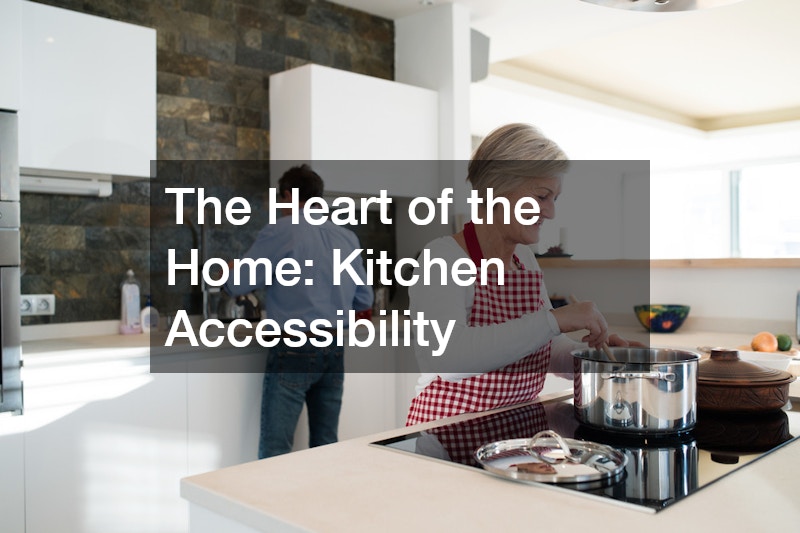
The kitchen is often where independence is most fiercely guarded. If a resident cannot reach the stove or the sink, they lose the ability to care for themselves. The goal here is to bring the workspace to the user rather than forcing the user to adapt to the architecture.
-
Variable Height Countertops: Implementing sections of counter that can be lowered for seated prep work, or even motorized surfaces that move at the touch of a button.
-
Smart Storage: Replacing deep, dark base cabinets with full-extension pull-out drawers and “lazy Susans” that bring items to the front.
-
Appliance Selection: Choosing side-swing ovens (which prevent the user from having to reach over a hot door) and induction cooktops that stay cool to the touch.
When interviewing kitchen contractors, it is vital to ask about their experience with “toe kick” heights and reachable workspace ratios. They must understand that every inch matters when designing a kitchen that remains functional for someone in a seated position. A well-designed kitchen not only fosters self-sufficiency but also allows the cook to interact with the family without physical barriers.
Vertical Mobility and Multi-Story Living
For many, the second floor becomes an abandoned territory as mobility decreases. However, you don’t always have to move your bedroom to the dining room to stay in your home. The first step is evaluating your floor plan to see if a first-floor primary suite is feasible. If not, mechanical aids become the bridge to the upper levels.
A technical guide to stair lift installation involves more than just picking a chair. Professionals must evaluate the rail type—whether straight for simple runs or curved for stairs with landings—and ensure the system includes power backup in case of a blackout. For those who require a more robust solution, residential elevators are the gold standard.
Planning for the future can also include “stacked closets,” where closets on the first and second floors are aligned and built with knock-out floors. This forward-thinking strategy allows for a relatively easy elevator conversion later without having to alter the home’s footprint significantly. Restoring access to the entire home can have a massive positive impact on a resident’s mental health and sense of belonging.
Expanding the Footprint: In-Law Suites and Additions
Sometimes, the existing layout of a home is too restrictive for meaningful modification. In these cases, expanding the footprint is the most effective way to ensure a barrier-free environment. Building a “Universal Annex” or a self-contained suite with its own accessible entrance allows for multigenerational living while preserving privacy.
Navigating the zoning and permits for a home addition can be complex, especially when dealing with Accessory Dwelling Units (ADUs). It is crucial to ensure the new structure matches the original architecture to maintain property value and neighborhood character. This level of complex engineering requires a dedicated home remodeler who can manage everything from foundation pouring to the final roofline, ensuring the new wing is seamlessly integrated both functionally and visually. These additions provide a long-term housing solution that can adapt as the family’s health and living needs change over time.
Entryways and First Impressions
The transition from the world into the home should be welcoming, not a physical struggle. This starts with “widening the welcome.” Most standard interior doors are 30 inches wide, but a wheelchair or walker typically requires a minimum 32-inch (and preferably 36-inch) clear width.
Threshold management is the next priority. During an exterior door replacement, homeowners should opt for low-profile sills. Standard thresholds often create a one- to two-inch “bump” that acts as a significant trip hazard or a barrier for wheels. Additionally, switching to lever-style handles (which can be operated with a closed fist) and installing motion-activated pathway lighting makes the entry process safer for those with limited dexterity or vision. These small hardware upgrades provide an immediate boost to the home’s usability for guests and residents alike.
Hardscaping and Exterior Access
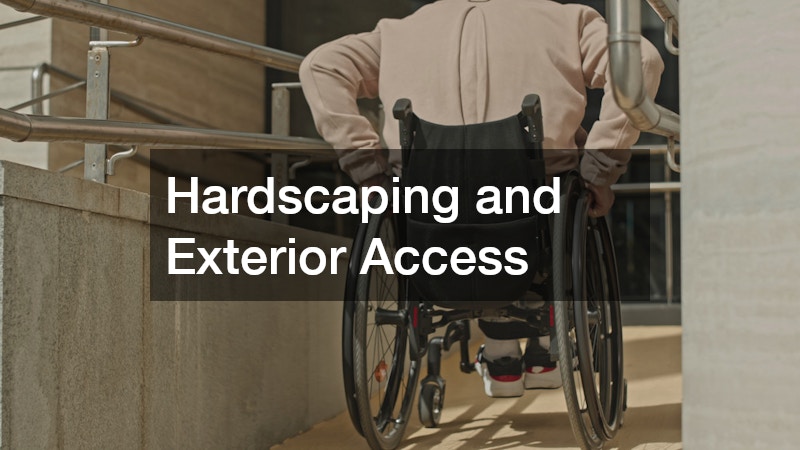
The approach to the house is just as important as the interior. If a wheelchair user cannot get from the driveway to the porch, the interior modifications are moot. Adhering to the “Golden Ratio” of ramps—a 1:12 slope—is the safety standard for manual wheelchairs. This means for every inch of vertical rise, you need twelve inches of ramp length.
-
Material Selection: While wood is common, aluminum and masonry offer superior longevity and slip resistance in inclement weather.
-
Graded Walkways: In many cases, a “landscaped ramp” that uses sloped earth and stone is more attractive than a mechanical-looking structure.
Hiring a professional concrete contractor is necessary for these tasks. They can pour stable, non-slip walkways and landings that provide the required level of support for heavy power chairs and ensure that water drains away from the path, preventing ice buildup in the winter months. Solid, well-engineered exterior paths ensure that independence begins the moment a resident steps outside their vehicle.
Budgeting, Financing, and Tax Incentives
The financial aspect of accessibility is often the most daunting. However, it is helpful to view these costs through the lens of Return on Investment (ROI). Accessibility modifications increase the resale value to a rapidly growing demographic of older buyers. Furthermore, the cost of a major renovation is often significantly lower than the annual cost of an assisted living facility.
Financial assistance is available through various channels:
-
VA Grants: Programs like HISA (Home Improvements and Structural Alterations) provide funding for veterans.
-
Medicaid Waivers: Some states offer “Home and Community Based Services” (HCBS) waivers that cover environmental accessibility adaptations.
-
Non-Profits: Organizations like Rebuilding Together often help low-income seniors with safety repairs.
Furthermore, many medically necessary home improvements can be deducted from federal taxes. If a doctor recommends specific changes to accommodate a disability, the cost of those modifications (minus any increase in property value) may be considered a deductible medical expense. Consulting with a financial advisor or tax professional can help you maximize these benefits while funding your renovation.
Environmental Controls and Sensory Design
Accessibility also encompasses the invisible elements of the home: air quality, sound, and light. For individuals with sensory sensitivities or respiratory issues, the home must be a controlled environment.
-
Smart Home Ecosystems: Voice-controlled thermostats, blinds, and security systems allow individuals with limited mobility to manage their environment without moving.
-
Lighting Quality: Higher “lumen” counts and high-contrast color schemes help those with low vision navigate rooms safely.
-
Acoustic Treatment: Soft surfaces and sound-dampening materials can reduce the “echo” that often confuses those with hearing aids.
By integrating these elements during the planning phase, you create a home that supports the nervous system as much as it supports the musculoskeletal system. High-tech sensors can also alert family members to unusual activity or emergencies, providing an extra layer of passive safety.
Creating an accessible home is a journey toward resilience. It is an investment in the future of the family, ensuring that the house remains a place of joy and safety regardless of what the years may bring. By focusing on universal design, you are not merely accommodating a disability; you are creating a more intuitive, comfortable, and luxurious living space for everyone.
The peace of mind that comes from knowing a fall is less likely, or that a loved one can still cook their own meals, is immeasurable. Long-term resilience is about building a space where you can stay for decades, surrounded by memories, with your dignity intact. Whether you are just beginning to research or are ready to break ground, the best first step is always a professional consultation to prioritize your specific needs and build a roadmap for a barrier-free life. A truly accessible home is the ultimate expression of love and care for oneself and one’s family.
Ultimately, the true value of an accessible home lies in the freedom it grants. It removes the daily micro-stresses that accumulate when a physical environment works against its inhabitants, replacing them with a sense of mastery and ease. By investing in these changes, you aren’t just altering a building; you are fostering an environment where every individual, regardless of age or physical ability, can thrive, contribute, and live with absolute confidence in their own home. Your home should be a partner in your independence, providing a steadfast foundation that empowers you to navigate every chapter of life with grace and strength.